


Press release
July 16, 2026, No. 114
Second Roundtable on Cycling
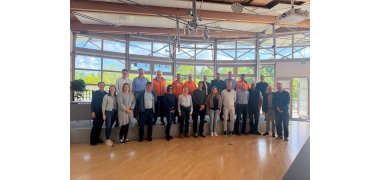
Bad Tölz-Wolfratshausen District. At the second roundtable on cycling on May 21, 2026, representatives from the cities and municipalities, neighboring districts, the State Building Authority, and the ADFC gathered to discuss current projects and the future development of cycling in the district.
One focus of the event was quality assurance for bike path signage. Last year, the entire network of signposted bike paths was inspected for defects with the help of volunteer trail wardens. Dedicated volunteer trail inspectors from cycling clubs and interest groups were recruited to conduct the on-site inspections, including the ADFC Bad Tölz-Wolfratshausen, Nagel und Faden e. V., and the Isarwinkler Radsportfreunde. “Achieving this in just a few months is truly impressive and shows how dedicated the clubs are to improving cycling in our district,” emphasized Felix Schreiber, the district’s cycling coordinator. The next step is to work with the cities and municipalities to address the identified issues.
In addition to reviewing the existing signage, the consulting firm topplan presented a new concept for the tourist bike trails. The goal of the concept is to further improve the quality of the bike routes and to better integrate everyday and recreational cycling. As part of the overhaul, the signposted bike path network will grow from the current 550 kilometers to approximately 620 kilometers. At the same time, the number of signs will increase to more than 3,500, further improving wayfinding for cyclists.
Another item on the agenda focused on the growing trend of gravel biking. The District Administration, in partnership with Tölzer Land Tourismus, sees this as an opportunity to, on the one hand, strategically direct visitor flows while reducing pressure on sensitive natural areas, and, on the other hand, to create an attractive tourism product for both visitors and locals. Existing gravel bike routes are scheduled to be revised in 2026 in collaboration with the consulting firm topplan and integrated into the digital trail management system. In addition, two new routes are planned: a connection between Bad Tölz, Geretsried, Wolfratshausen, and Bad Heilbrunn, as well as a route around the Loisach-Kochelsee Moor. The tours will be published exclusively online; on-site signage is not planned, not least because of this target group’s particular affinity for digital media.
Another key topic at the roundtable was the construction and expansion of bike paths. These measures are considered crucial for the transportation transition, but they often present significant challenges. “Arguably the biggest challenge in bike path construction is land acquisition,” explained Martin Herda of the Weilheim State Building Authority, which is responsible for federal and state highways as well as the accompanying bike paths in the Bad Tölz-Wolfratshausen district.
Added to this are the requirements of nature and species conservation. On the one hand, the construction of new bike paths creates the conditions for climate-friendly mobility and thus makes an important long-term contribution to climate protection. On the other hand, every construction project impacts nature and the landscape and requires interventions in existing habitats.
So does that mean we have to choose between nature conservation and climate protection? “No,” says Felix Schreiber, who is responsible for both bicycle traffic and climate protection at the district administration office. “While building a bike path does have an impact on nature, climate change poses a far greater long-term threat to our native animal and plant species—and thus to biodiversity.” Currently, the same mitigation and compensation requirements apply to the construction of bike paths as to other construction projects that involve soil sealing or impacts on nature and the landscape. These regulations hinder the expansion of cycling infrastructure, which is necessary for a successful transportation transition. The roundtable participants agreed, however, that promoting sustainable mobility is an essential component of climate protection. Reducing transportation-related emissions not only helps limit climate change in the long term but ultimately also benefits the protection of nature and biodiversity.
In conclusion, there was agreement that cycling will continue to grow in importance in the district. Close intermunicipal cooperation is essential to expand and further develop the bicycle path network in line with demand. At upcoming roundtable meetings, all participants intend to further deepen this cooperation and work together to strengthen cycling in the region in a sustainable manner.
Sabine Schmid
Press spokeswoman
Bad Tölz-Wolfratshausen District Office